24 thg 9, 2010

Experience on writing task 2

Do you agree or disagree?
To what extent do you agree with...?

What is the difference between two IELTS task 2 question types above?

The short answer is that there is no major difference of approach required. If the question was “Do you agree or disagree?” Then you can still answer in your conclusion that “There are strong arguments on both sides of the issue, but I tend to think that…” you can always agree to some extent. Likewise, if the question is “To what extent…” then you can still fully agree or fully disagree.


22 thg 9, 2010

Thông báo họp mặt

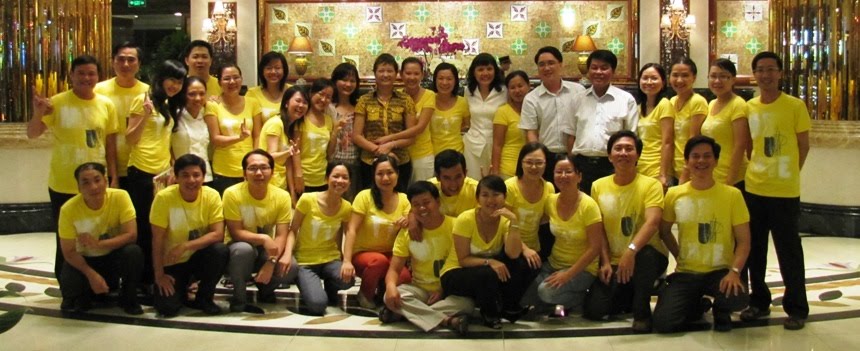
Kính mời các Anh/Chị tham dự buổi họp mặt kỷ niệm ngày Nhà Giáo Việt Nam và cũng là buổi họp mặt lần 2 của các Anh/Chị là học viên lớp cao học chuyên ngành Quản lý Giáo dục Khóa 20 vào lúc 11 giờ ngày thứ 7, 13/11/2010.

Thời gian và địa điểm cụ thể sẽ thông báo sau. Kính mong các Anh/Chị sắp xếp thời gian tham dự đầy đủ.

Thiện Cang.

6 chiếc mũ tư duy


“6 chiếc mũ tư duy” là một công cụ trợ giúp tư duy được Edward de Bono giới thiệu trong cuốn “6 Thinking Hats”. Đây là một phương pháp cực kỳ hiệu quả, giúp bạn đánh giá sự việc từ nhiều góc nhìn khác nhau để đưa ra quyết định tốt hơn. Nhờ vậy, bạn sẽ hiểu rõ hơn mọi ngóc ngách của sự việc, nhận diện được những nguy cơ và cơ hội mà bình thường bạn có thể không chú ý đến.

Những người thành đạt thường tư duy theo hướng tích cực, thiên về lý trí, và đó là một trong những lý do giúp họ thành công. Mặc dù vậy, thông thường, họ có thể không đánh giá vấn đề từ các góc nhìn khác như cảm xúc, trực giác, sáng tạo hoặc mang tính tiêu cực. Hệ quả là đôi lúc họ bỏ qua những yếu tố có thể đưa đến sự thay đổi, không thể tạo ra những đột phá thật sự và không chuẩn bị những kế hoạch dự phòng cần thiết cho những rủi ro có thể gặp. Ngoài ra, những người đã quen giải quyết vấn đề một cách khoa học có thể sẽ không phát huy được khả năng sáng tạo hoặc giải quyết vấn đề dựa trên trực giác của họ.

Nếu đánh giá một vấn đề bằng phương pháp “6 chiếc mũ tư duy”, bạn có thể giải quyết nó dựa trên tất cả các góc nhìn đã đề cập. Bạn sẽ kết hợp được cả tham vọng, kỹ năng thực hành, sự nhạy cảm, sáng tạo và khả năng lập kế hoạch dự phòng tốt trong việc ra quyết định và hoạch định.

Kỹ thuật “6 chiếc mũ tư duy”
Hãy lần lượt “đội” 6 chiếc mũ để đánh giá vấn đề. Mỗi lần đội mũ tức là bạn lại chuyển sang một cách tư duy mới.
.
Mũ trắng

Khi đội “Mũ trắng”, bạn sẽ đánh giá vấn đề một cách khách quan, dựa trên những dữ kiện có sẵn. Hãy nghiên cứu thông tin bạn có để tìm ra câu trả lời cho những điều bạn còn thắc mắc.

· Mũ đỏ
Khi đội “Mũ đỏ”, bạn sẽ đánh giá vấn đề dựa trên trực giác và cảm xúc. Hãy cố gắng đoán biết cảm xúc của người khác thông qua những phản ứng của họ và cố gắng hiểu được những phản ứng tự nhiên của những người không hiểu rõ lập luận của bạn.

· Mũ đen
Khi đội “Mũ đen”, bạn cần đánh giá vấn đề theo góc nhìn tiêu cực, cẩn trọng và e dè. Hãy cố gắng đoán trước những nguyên nhân có thể khiến ý tưởng và cách giải quyết vấn đề không đạt hiệu quả như mong đợi. Nhìn nhận sự việc theo cách này sẽ giúp bạn loại bỏ những điểm yếu trong một kế hoạch hoặc cách thức tiến hành công việc, điều chỉnh cách giải quyết vấn đề hoặc chuẩn bị kế hoạch dự phòng cho những vấn đề có thể nảy sinh ngoài dự kiến.

Nhiều người thành đạt đã quen với việc suy nghĩ một cách lạc quan. Do vậy, họ có thể sẽ không dự kiến hết được những vấn đề có thể phát sinh nên không có sự chuẩn bị chu đáo. Cách tư duy “Mũ đen” sẽ giúp họ tránh được điều này.

· Mũ vàng
Khi đội “Mũ vàng”, bạn sẽ suy nghĩ một cách tích cực. Sự lạc quan sẽ giúp bạn thấy hết được những lợi ích và cơ hội mà quyết định của bạn mang lại. Cách tư duy “Mũ vàng” giúp bạn có thêm nghị lực để tiếp tục công việc khi bạn gặp nhiều khó khăn, trở ngại.

· Mũ xanh lá cây
Mũ xanh lá cây tượng trưng cho sự sáng tạo. Lối tư duy tự do và cởi mở khi đội “Mũ xanh” sẽ giúp bạn tìm ra những giải pháp sáng tạo để giải quyết vấn đề.

· Mũ xanh dương
Đây là chiếc mũ người chủ tọa đội để kiểm soát tiến trình cuộc họp. Khi gặp khó khăn do bế tắc về ý tưởng, chủ tọa có thể linh hoạt điều chỉnh cách tư duy của mọi người dự họp sang hướng “Mũ xanh lá cây”. Còn khi cần lập kế hoạch dự phòng, chủ tọa sẽ yêu cầu mọi người tư duy theo cách “Mũ đen”.
Bạn có thể sử dụng phương pháp “6 chiếc mũ tư duy” trong các cuộc họp hoặc khi giải quyết vấn đề của mình. Nếu dùng trong các cuộc họp, kỹ thuật này sẽ giúp chủ tọa tháo “ngòi nổ” xung đột có thể xảy ra khi nhiều người có lối tư duy khác nhau cùng thảo luận về một vấn đề. Bạn cũng có thể sử dụng một phương pháp khác tương tự với “6 chiếc mũ tư duy” là đánh giá vấn đề từ quan điểm của nhiều chuyên gia (bác sĩ, kiến trúc sư, giám đốc kinh doanh …) hoặc khách hàng.


“6 chiếc mũ tư duy” là phương pháp lý tưởng để đánh giá tác động của một quyết định từ nhiều quan điểm khác nhau. Nó giúp bạn kết hợp những yếu tố thuộc về cảm tính với những quyết định lý tính và khuyến khích sự sáng tạo khi ra quyết định. Nhờ vậy, kế hoạch của bạn sẽ hợp lý và chặt chẽ hơn. Ngoài ra, nó còn có thể giúp bạn tránh được những sai lầm về giao tế nhân sự và thấy trước những nhược điểm của một kế hoạch hành động.

(Theo mindtools.com)
21 thg 9, 2010

IELTS essay sample 4

Television has had a significant influence on the culture of many societies. To what extent would you say that television has positively or negatively affected the cultural development of your society?

It is unarguable that television has had a considerable impact and changed the world in which we live. However, there is debate whether that change has been for the better or the worse, when we consider cultural development. While there are certainly strong feelings on both sides of the argument in western Europe, my own view is that television has had a largely positive influence on our society.

There are, however, several reasons why it can be argued that television has a negative effect on cultural development. Perhaps the principle argument is the lowbrow nature of many programmes, particularly sitcoms and soap operas. People who watch these programmes do not learn anything, they are simply entertained. The other major argument is that because people watch so much television, they no longer take part in more traditional forms of cultural entertainment. An example here is how traditional dancing and music is becoming much less popular because people are staying at home to watch the television.

On the other hand, there are a variety of ways in which cultural development has been assisted by television. Here the major argument is that television has allowed the whole of society access to cultural entertainment. For example, in the nineteenth century only a small proportion of people could go to the ballet or the theatre. However, it is now possible for everyone to enjoy these on television. A second positive effect is that on television we can learn more about other cultures and societies because there are so many interesting documentaries about other countries.

My personal conclusion is that television is a largely positive influence. However, it is important that we do not watch it too much and that we watch the right sort of programme. If we watch the wrong sort of programme and watch too much television, we may become couch potatoes. (câu điều kiện)

IELTS essay sample 3

Successful sports professionals can earn a great deal more money than people in other important professions. Some people think this is fully justified while others think it is unfair. Discuss both these views and give your opinion.


The world of sports is a multimillion dollar industry. Around the globe, people flock to sporting events or watch their favourite teams faithfully each week on television. As a result, professional sports athletes receive huge salaries – well above, for example, those of doctors, lawyers, teachers or social workers. There is some debate about whether such outrageously high salaries are justified.

On the one hand, sport is viewed as a professional career, in which the top players should rightly earn high salaries. Athletes train rigorously from an early age to become peak performers in their field. They face tremendous pressure in each and every game, match or competition. Their personal lives are compromised and they lose all privacy. At the same time, their strong achievements bring honour and attention, not only to themselves, but also to their teams, schools, cities or countries.

On the other hand, various professions contribute to making our world run smoothly. Doctors put in at least ten years of grueling study and internship; their work saves lives. Teachers educate and inspire young people to be responsible citizens: their efforts produce the citizens of tomorrow. Social workers rescue individuals facing physical, mental and psychological challenges: their intervention creates safer societies.

Yet, professionals in the fields above usually struggle to get by, despite their meaningful and critical contribution to the world.

In my view, paying enormous salaries to sportspeople is unnecessary. We need to reconsider our social priorities and eliminate the great disparity in income received by diverse professionals. By doing so, we can build societies in which each one feels valued, appreciated and appropriately compensated for their own vocation or specialization.

(

20 thg 9, 2010

IELTS essay sample 2

Modern lifestyles mean that many parents have little time for their children. Many children do not get as much attention from their parents as children did in the past.

To what extent do you agree or disagree?

One common concern nowadays is how modern lifestyles can have a negative effect on family life. A particular worry is that parents no longer are able to provide sufficient care and support for their children. My own view is that this is generally true, but not always so.
If we look at the past, the traditional family structure was the husband was the head of the family and his duty was to provide for his immediate family by going out to work. His wife’s role was to stay at home and bring up the children. In this situation we should note that the children frequently did not see much of their father during the working week.
In the present day, that traditional structure has changed in many cultures. One reason for this is that it is more and more common for the wife to go out to work because it is now accepted that woman have as much right to work as men. A consequence of this is that many children do not see their mother as often as they would have done in the past. A second reason is that divorce has increased and in single-parent families children only ever see one parent.
We should also consider, however, that these changes are not the same for all families. In low income families, for instance, it has always been normal for both parents to work. Likewise, if the family is close-knit, the parents will still spend time with their children even though they both work.
My conclusion is that generally most children see less of their parents and this is due to changing lifestyles. However, this is not always the case.

19 thg 9, 2010

IELTS essay sample 1

Topic:
Should museums and art galleries be free of charge for the general public, or should a charge, even a voluntary charge, be levied for admittance? Discuss this issue, and give your opinion.

Sample:
One very complex issue in today’s world is the funding of museums and art galleries. While there is an argument that they should be free to the general public and funded by governments, I also believe that there is also a case for saying that they should charge an entrance fee like other attractions.
Those who argue that museums should be free typically make one of two arguments. The first argument is that institutions like museums are a public service and therefore there should be free access to the man in the street. If for example there was a charge only the wealthy could afford to enjoy works of art. The second, and related, argument is that if they did levy a charge fewer people would go to museums. This would be serious as they are educational institutions and standards would fall.
In contrast, there is only one major argument on the other side of the debate. This is that both museums and art galleries need to charge an entrance fee if they are to survive in the modern world. Governments do not have sufficient funds to subsidise all such institutions and there are other priorities for public money. Therefore these galleries and museums need to charge their customers not only to survive but to update their exhibitions and make new purchases. By way of illustration, the Tate Modern in London could not have been founded without revenue from admissions.
My personal position is that there is no clear answer to this question (N khoái câu này) as there are such strong arguments on both sides. Perhaps it is possible for some museums and galleries to charge fees and for others not to. It will depend on the situation of the individual museum or gallery.

Underlined words and phrases are useful for task 2. I suppose we might use those words and phrases in any essays of this kind (giving opinion).

Personal opnions are only seen in introduction and conclusion.

Practice Speaking (to be continued)

N tiếp tục gửi đến các anh chị các topic cuối cùng từ 31 -40 với các chủ đề: (Mark Allen's speaking book)
- Advice
- An unsatisfactory Purchase
- Exhibitions
- Being late
- A time when you help someone
- Busy days
- Practical Skills
- To start a small business
- A large sum of money
- A goal you want to achieve
- A meal
Nhấn vào đây để tải audio files.